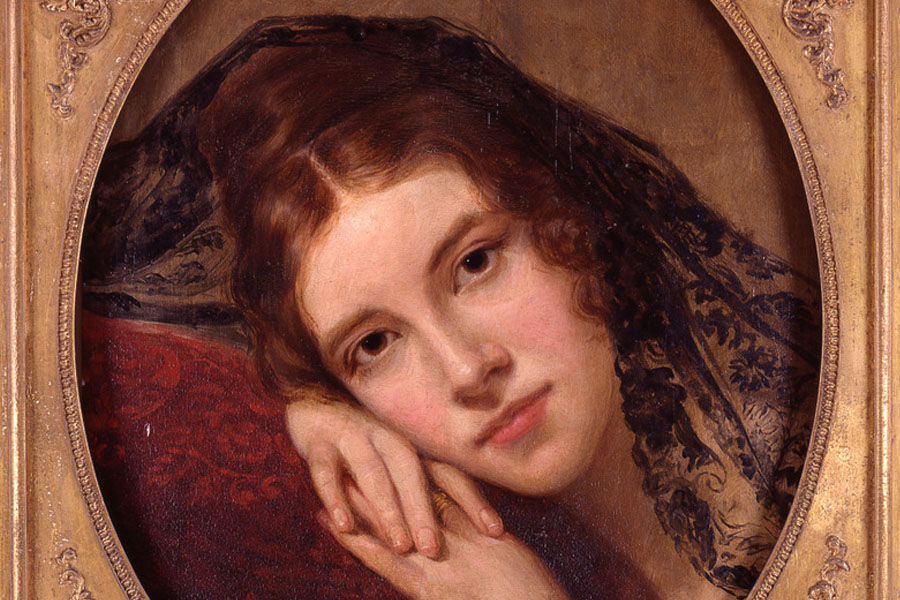
Basic Information
| Item | Details |
|---|---|
| Full name | Frances Elizabeth Appleton Longfellow |
| Known as | Fanny Appleton Longfellow |
| Born | October 6, 1817 |
| Birthplace | Boston, Massachusetts |
| Died | July 10, 1861 |
| Parents | Nathan Appleton and Maria Theresa Gold Appleton |
| Spouse | Henry Wadsworth Longfellow |
| Children | Charles, Ernest, Frances, Alice, Edith, and Annie |
| Known for | Literary partnership, drawings, journals, letters, family life, social influence |
| Burial | Mount Auburn Cemetery |
A Boston Childhood Shaped by Wealth, Books, and Expectation
I see Fanny Appleton Longfellow as a woman born at the bright center of 19th century Boston. She entered life in 1817 in a family that had money, standing, and reach. Her father, Nathan Appleton, was not just a prosperous merchant. He was a man tied to industry, politics, and the growth of New England power. Her mother, Maria Theresa Gold Appleton, belonged to another respected family line. Together, they gave Fanny a house full of privilege and pressure.
Her childhood was not idle. It was curated like a fine library shelf, ordered and polished, but alive with thought. She studied at schools connected with important educators, learned languages and practical subjects, and was trained in art, history, and manners. I think that matters because it shows she was not simply prepared for drawing rooms. She was prepared for ideas. Her mind was given room to move.
Loss came early. Her mother died in 1833. A brother died in 1835. Another sibling died in infancy years before. These were not small notes in the margins. They were deep cuts in the family story. Fanny grew up in a world where beauty and sorrow lived side by side, like winter light on old stone.
The Appleton Family and the Web Around Her
The world Fanny came from is explained via her family tree.
Her father, Nathan Appleton, was influential in Boston. He shaped regional commerce and industry. His class created the city’s social architecture, with its rules, confidence, and long memory.
Fanny was connected to another New England family by her mother, Maria Theresa Gold Appleton. Her death created a home silence that affluence could not cover.
Her paternal grandparents were Isaac Appleton and Mary Adams. Her mother’s parents were Thomas and Martha Marsh Gold. These names indicate deep familial roots. Fanny didn’t appear out of nowhere. She had rings of heritage like an old oak.
Her siblings also stood out. Thomas Gold Appleton, a bright and sophisticated writer and artist, remained close to Fanny’s inner world. Marriage took Mary Appleton Mackintosh’s family transatlantic. Charles Sedgwick Appleton died young, adding to family sadness. George William Appleton, who died in infancy, is another reminder that the Appleton home suffered repeated sadness.
This family refined and lost simultaneously, which is striking. Not only were the Appletons prominent. Human, layered, and vulnerable.
Meeting Henry Wadsworth Longfellow
The meeting that changed her life happened during the family’s European travels in 1836. In Switzerland, Fanny met Henry Wadsworth Longfellow. He was already becoming a major literary figure, and she was young, bright, and deeply educated. Their connection was not instant in the shallow sense. It was patient, reflective, and intense.
I think their courtship reads like a long poem written in letters. It lasted years. Henry admired her intellect and charm. Fanny did not surrender quickly, which makes her feel vivid and real to me. She was not a decorative answer to his life. She was a participant in it.
They married on July 13, 1843, in Boston. From that point on, her life became closely braided with his, but never erased by him. She read for him, copied for him, advised him, and shaped the atmosphere in which he worked. In many households, that would be invisible labor. In theirs, it became part of the literary engine.
Marriage, Home, and the Longfellow Children
The Longfellow household was both domestic and intellectual. I imagine it as a house where books and children lived in the same air. Fanny and Henry had six children, and each one added a new shape to the family story.
Charles Appleton Longfellow was their first son. Ernest Wadsworth Longfellow followed and later married Harriet Maria Spelman. Frances Longfellow, named after her mother, died in infancy, a brief flame in the family record. Alice Mary Longfellow lived a long life and later became an important guardian of the family’s legacy. Edith Longfellow Dana married Richard Henry Dana III and carried the line into another prominent New England family. Annie, also called Anne Allegra Longfellow Thorp, married Joseph Gilbert Thorp.
Fanny was not only a mother. She was the first teacher in the home. That role matters. I picture her voice guiding lessons at a table while children leaned over pages and maps. Her family life was not separate from culture. It was culture.
One detail stands out above the rest. In 1847, during childbirth, ether was used in a way that later became historically significant. That moment places Fanny at the crossing of family history and medical history. Her body was a site where larger change touched private life.
A Mind of Her Own: Drawing, Journals, and Letters
I do not want Fanny remembered only as a poet’s wife. She kept journals. She wrote letters by the hundreds. She drew. She observed. She preserved. Her notebooks and correspondence reveal a woman who was alert to language and image.
Her drawings, including travel sketches, show that she had a visual eye. She was not merely recording scenery. She was trying to hold experience in place, like catching light in a glass. Her writing gives the same impression. It is intimate, exact, and alive with movement.
She also served as a reader and scribe for Henry, especially later in life. That work was practical, but it was also literary. She helped carry the household voice. In a family of talent, she was one of the central instruments.
Social Life, Friendship, and Quiet Influence
Fanny moved through Boston society with ease, but not superficiality. She was connected to literary and reform circles, and she had friendships with people such as Charles Sumner and Julia Ward Howe. That tells me she was part of a wider world of thought, abolition, art, and conversation.
She belonged to the kind of household where ideas could be spoken over tea and endure for years. Her home on Brattle Street became part salon, part refuge, part workshop. In that sense, she was not standing beside history. She was helping arrange its furniture.
Final Years and Her Sudden Death
She died in 1861 from fire burns. Her death occurred the following morning. Henry’s injuries and anguish never left him. She died, and her absence shaped his later work.
She ended horribly abruptly, like a candle snuffed out in a room full of discussion. The room was not dark. The Longfellow family kept her memory alive as her children grew and her letters survived.
Family Members at a Glance
| Family Member | Relationship | Brief Introduction |
|---|---|---|
| Nathan Appleton | Father | Merchant, manufacturer, politician, and major Boston figure |
| Maria Theresa Gold Appleton | Mother | Matriarch of the Appleton household, linked to another respected family line |
| Isaac Appleton | Paternal grandfather | Part of the Appleton lineage that anchored Fanny’s heritage |
| Mary Adams | Paternal grandmother | Family ancestor on the Appleton side |
| Thomas Gold | Maternal grandfather | One of the Gold family ancestors |
| Martha Marsh Gold | Maternal grandmother | Part of Fanny’s maternal heritage |
| Thomas Gold Appleton | Brother | Writer, collector, and cultivated family companion |
| Mary Appleton Mackintosh | Sister | Married into British colonial society |
| Charles Sedgwick Appleton | Brother | Died young, adding to the family’s early losses |
| George William Appleton | Brother | Died in infancy |
| Henry Wadsworth Longfellow | Husband | Celebrated poet and literary partner |
| Charles Appleton Longfellow | Son | Eldest child, later a Civil War veteran |
| Ernest Wadsworth Longfellow | Son | Married Harriet Maria Spelman |
| Frances Longfellow | Daughter | Died in infancy |
| Alice Mary Longfellow | Daughter | Later preserved the family legacy |
| Edith Longfellow Dana | Daughter | Married Richard Henry Dana III |
| Annie Longfellow Thorp | Daughter | Married Joseph Gilbert Thorp |
FAQ
Who was Fanny Appleton Longfellow?
Fanny Appleton Longfellow was a Boston-born woman of wealth, education, and literary influence. I see her as a partner in Henry Wadsworth Longfellow’s life, but also as a writer, drawer, correspondent, mother, and social intelligence in her own right.
Why is she remembered today?
She is remembered because she stood at the heart of one of America’s most famous literary households. Her letters, journals, drawings, and family role reveal a rich private life that shaped public literature.
How many children did she have?
She had six children. Their names were Charles, Ernest, Frances, Alice, Edith, and Annie.
What made her family important?
Her family mattered because the Appletons were deeply connected to Boston wealth, commerce, politics, and culture. That background gave Fanny access to education and social influence, and it also shaped the world she moved in.
Did she have a career?
She did not have a modern paid career in the usual sense. Her work lived in art, correspondence, household teaching, reading, and literary companionship. I would describe her career as cultural labor rather than public employment.
What was her relationship with Henry Wadsworth Longfellow like?
Their relationship was intellectual, affectionate, and collaborative. He admired her, wrote about her, and relied on her presence in both family and literary life. She was his spouse, but also an active force in the household atmosphere.
Why does her story still matter?
Her story matters because it shows how women’s lives can shape literature, family memory, and social history even when they are not centered in official records. Fanny’s life has the texture of silk and ash together, elegant but marked by loss, intelligence, and enduring presence.